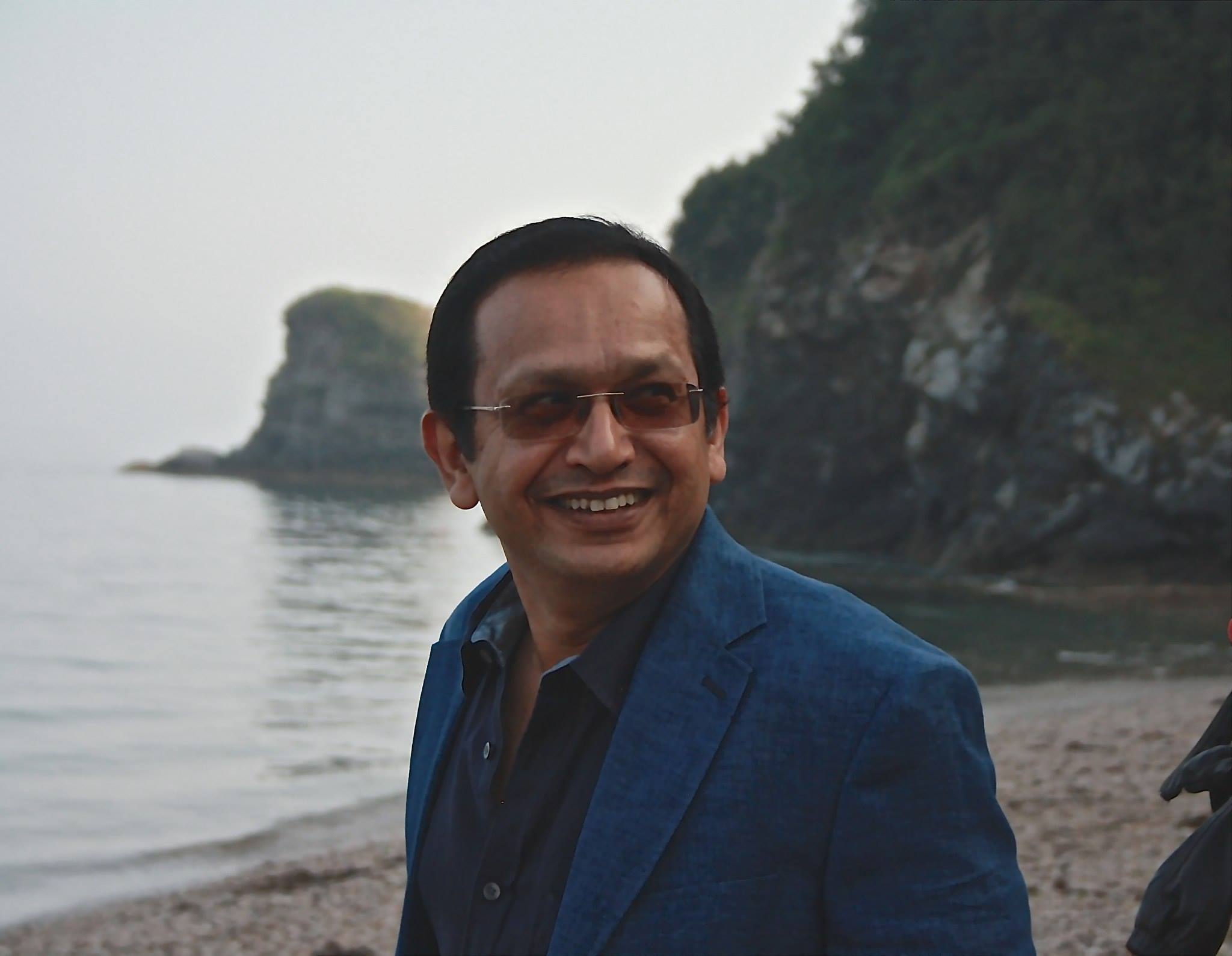
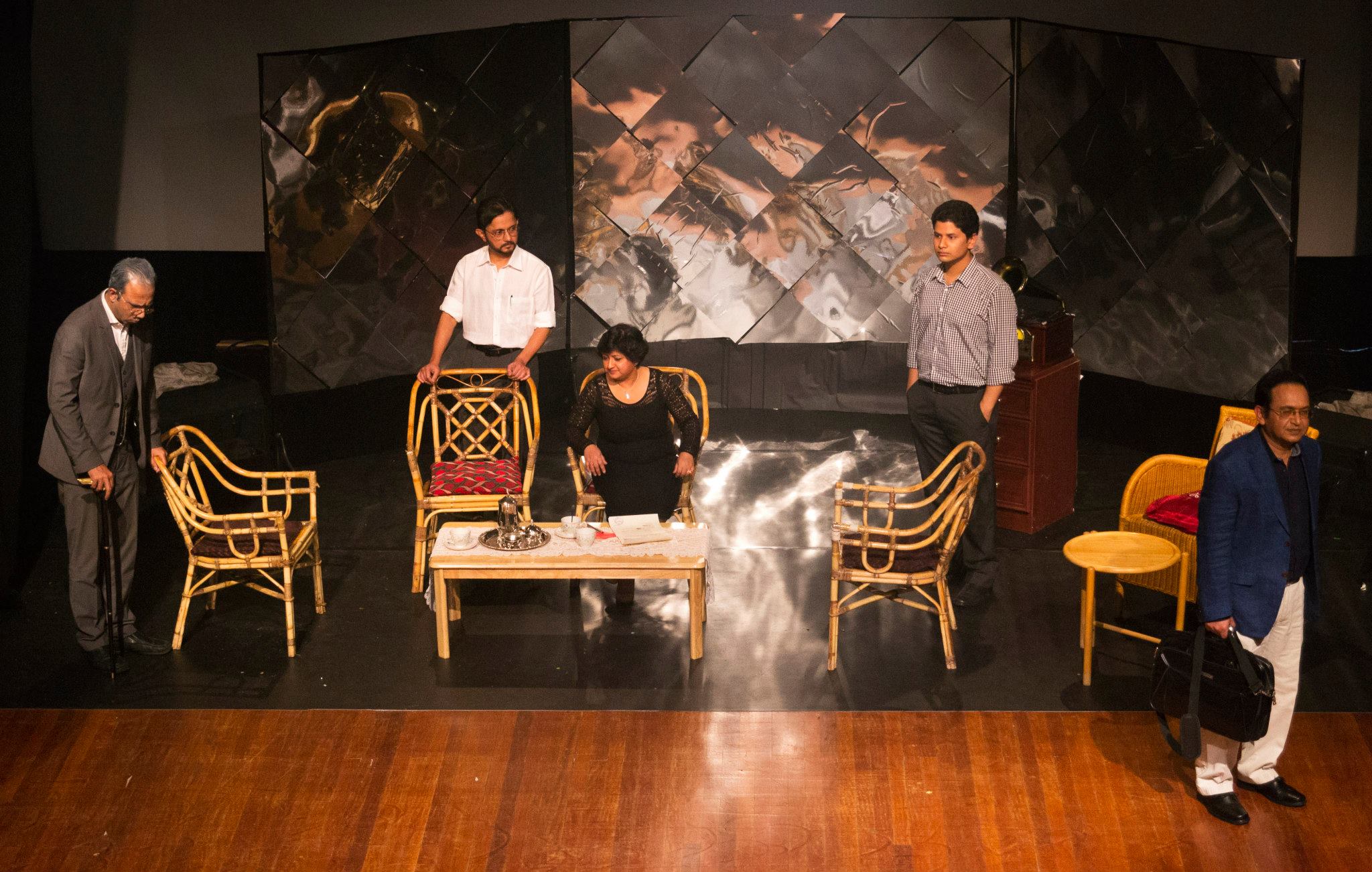
Debasish Banerjee is the playwright and director of the play Uttoradhikaar (The Inheritance) presented by the Eastern Thespians and performed as part of the Season of Bangla Drama 2014.
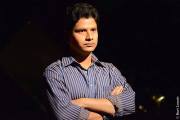
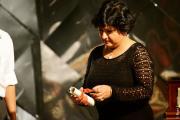


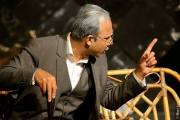
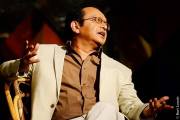
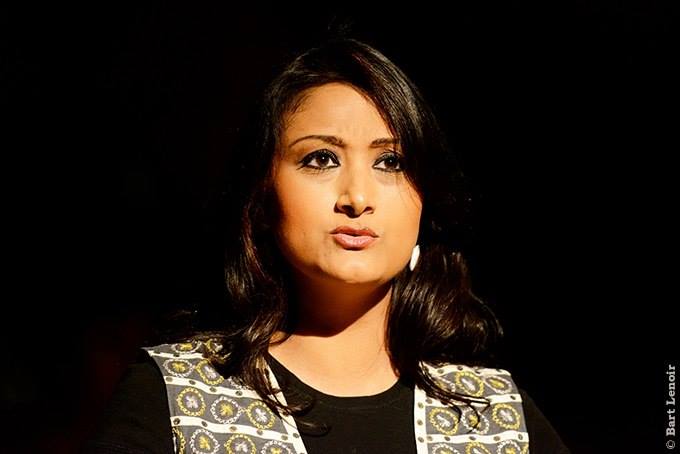
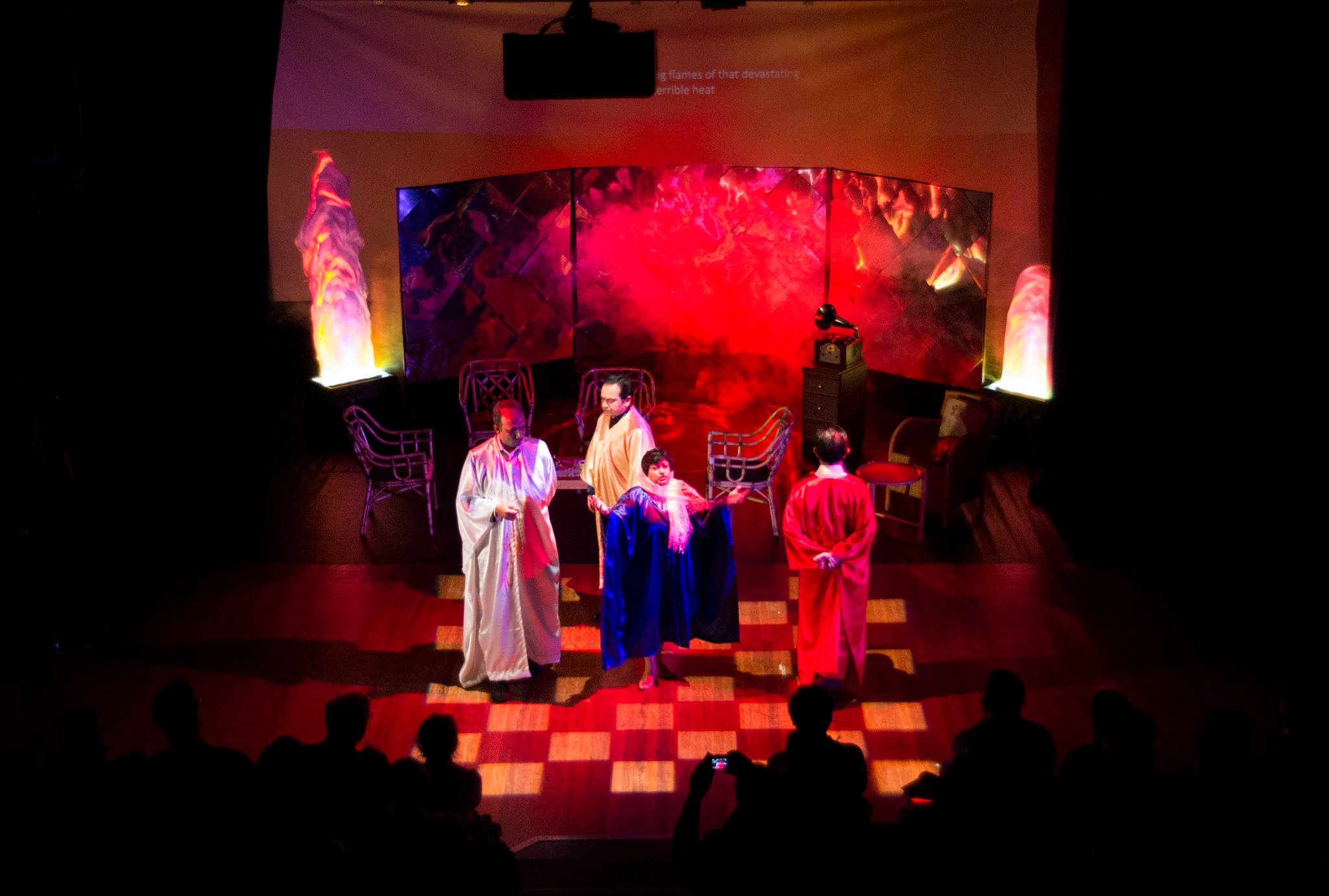
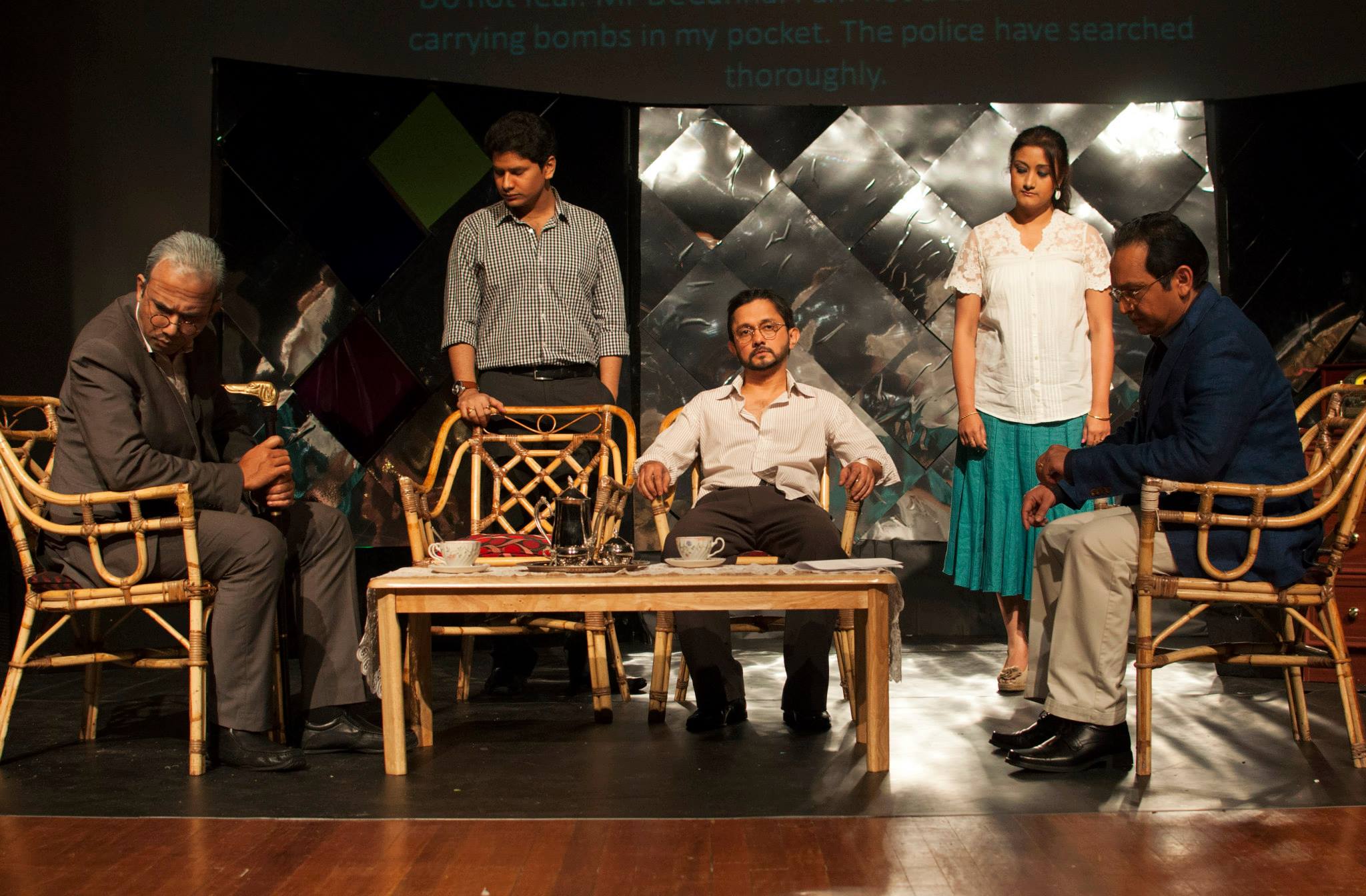
The rendition of this play about the De Cunha family and with the theme of identity explored through individuals living a time of political change and struggle, was powerful. It was striking that various conversations – between Anatole and his niece and nephew, between the siblings, between Margarita and Jose – had been repressed until now. Chandrayee Sen Gupta gave an outstanding performance to reveal the pain of Margarita, her longing for the past and the trapped feelings which were being forced to the surface through the events of the play. Many of the characters had been keeping their plans secret until this point. Essentially the play takes place at a crux point for the characters – it is time for them to look forward and the play ends with the inevitable signature to sign away the De Cunha estate symoblising the end of a period of Goan history.
A short synopsis of the play
Uttoradhikaar (The inheritance) is a two-hour play set in Goa in the turbulent period of late nineteen fifties. It revolves around the disintegrating De Cunha family estate. Margarita De Cunha, the protagonist, and Joaquim, her half-brother, are the heirs to the property according to the will of now deceased Dario De Cunha, their father. Their uncle, Anatole De Cunha, looks after the estate. The play opens on a Sunday morning with the De Cunhas entertaining two close family friends, Jose Fernandes, Margarita and her deceased husband Roberio’s childhood friend, now a successful businessman and Dr Kulkarni, their family doctor. As the play unfolds, Margarita’s fragile mental state is revealed and with it we witness her lapse, time and again, into a contextually similar illusory world where she is the queen of Goa in the latter part of the fifteenth century. This period, we come to understand through the play, was in many ways a time of change as the nineteen fifties. Through this interpolation of reality and illusion the story of human displacement, belonging, identity and relationships are explored in two different times in the history of Goa. 
I asked Debasish some questions about the inspiration behind Uttoradhikaar.
What inspired you to set a play in Bangla in the Goa of the 1950s?
I was asked to explore the issue of displacement and so I started thinking where in India have we had communities who have lived displaced from their original homes? I was drawn to Goa and Pondicherry and decided on Goa to explore the issue of identity within a migratory context.
What’s the historical context of Uttoradhikaar?
In 1955 there was debate over the future of Goa in the UN. The Portuguese sealed Goa’s borders, holding passports and limiting travel while India declared embargo on Goa. This was a turbulent time in Goa’s history leading to Goa being annexed to India in 1961. However, I found looking back further in the history of this region there had been many such shift points. I was drawn to the period between 1454 to 1471 when the Vijayanagara emperors had relaxed their hold over Goa giving importance to loyal local chieftains. Mahmud Gawan, general of Muhammad Shah III, the Bahmani Sultan, marched to annex Goa on 11th February 1471 and this ended a chapter in Goa’s history and also started a new one. I created Margarita, the protagonist, as a person in a mentally fragile state, who, being a student of history, lapses into an illusory world set around the time of invasion of Mahmud Gawan. Through this link to the past I have tried to draw attention to the fact that movement of peoples, and change is cyclical.
Does the disintegration of the De Cunha family reflect the political situation of the time? 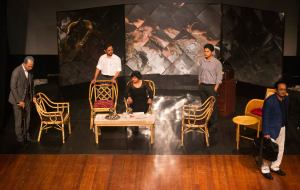 Yes, it does. At the end of the play Margarita is in the middle of the stage with the other characters moving away from her. She decides to sign the documents of sale of the family estate to set free the other characters in the play from the ties of physical ownership and the responsibilities of personal relationships. The truth is that you can’t hold on: you have to let go. History shows us that events are beyond the control of individuals.
Does the absence of a patriarch in the De Cunha family speak of the loss of legitimacy for the power of Portuguese rule?
What the play attempts to decipher encompasses much more than the loss of legitimacy of ownership. The play endeavours to explore the very nature of ownership by trying to understand what belongs to us, vis-à-vis where do we belong. Whereas the constant reference to Dario de Cunha makes his absence palpable in the face of the imminent disintegration of the de Cunha estate, the differing viewpoints of Anatole, Margarita and Joaquim with regard to their identity and belonging also makes us wonder whether the disintegration is inevitable. Herein lies the dramatic tension, where the individual is witnessed as being at once the architect and the victim of the inevitability of change, a common theme underlying the history of migration across the globe.
Why did you create the illusory world of Margarita? 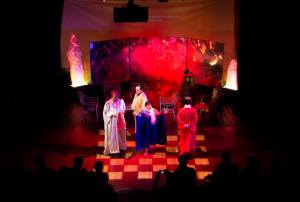
Through the illusory world of Margarita, I linked the real-time characters and happenings (of late nineteen fifties, when the play is set) to apparent figures that are true to the historical context of the happenings in Goa in 1471. In her illusory world, Margarita perceives herself to be the Queen and her son, the heir apparent. The doctor is the general, the Uncle is the Bishop/priest and Joachim is the half-brother of the deceased King of Goa (equivalent to the practically independent local ruler). The estate is like a child for Margarita and what happens to it is representative of her future. The characters of Margarita’s illusory world are extrapolations of her impressions of the characters around her in the real world. But in her illusory world, unlike in reality, she is in control almost throughout till the terrible reality of the climax overwhelms her illusory world. In the thematic context, her illusory world runs a close parallel to the real world, both true to their respective historical contexts. Through these parallel worlds the play attempts to focus on the fact that change in human condition is cyclical – a fact that also holds true for the story of human displacement throughout time.
What does the role of the doctor reveal about relationships between different ethnic groups at this time in Goa’s history? 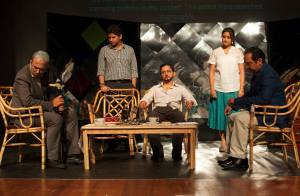
The doctor is an Indian; he is an idealist, he believes in an Indian future for Goa, but not in violence to achieve those ends. But where does he go after being arrested and released? He feels safe to go to the house of his friends, the Portuguese De Cunhas. Through this relationship between the doctor and the De Cunhas I make the point that these different characters, inheritors of different cultures and with different political views, still remain true friends and can discuss their varying ideas and beliefs in a civilised manner. I focussed on this aspect because I feel that in a world rife with intolerance based on such issues an attitude of tolerance and civilised behaviour needs reiteration. Such instances of true friendship and cultured response in face of divisive tension can be found in history of many nations across time whenever and wherever any society has passed through troubled times.
How do you explore the issue of identity?
In the play the characters are trying to seek their identity in relation to their birth, their forefathers, the land, their property and relationships. For instance, Margarita’s half brother, Joaquim has a Konkani mother. This makes him feel detached from the family and its Portuguese inheritance. Through the character of Joaquim I have endeavoured to explore the complexity of the psyche of those born of the inevitable intermarriages between the migrant people and the natives of a land and how they tend to interpret their identity. On the other hand, Margarita, who is of pure Portuguese descent, has a strong sense of her past but feels Goa to be her home, whereas, Anatole links himself more strongly to Portugal. Then there is Jose Fernandes who despite his Portuguese descent would have us believe that he identifies himself as a Goan but is willing to settle down wherever his business will flourish. But through his final decision to move to Lisbon I have left it open to the audience to arrive at their own answers as to what Jose thinks to be his true identity. It is but to draw attention to the complexity of the question of identity and belonging.
What is Margarita’s identity? As a sensitive person, Margarita explores this issue of identity on many levels. She accepts her Portuguese descent, but also allies herself with the land and, to some extent, breaks down the Portuguese / Goan dichotomy propagated by Uncle Anatole.
How do you see the identity of migrant groups in India? Identity is complex and not totally tied to current geographical location. History, heredity and cultural memory play important parts as does the land where one is born or where one lives for a considerable period of time. For instance, the Anglo-Indians are one such group, some of whom find it difficult to see themselves as totally Indian despite their huge contribution to India in areas such as the railways, music and sports. But with Joaquim and his fiancée planning a future in Bombay(now Mumbai), I make the point that where you live, work, put down roots, this forms a key part of your identity, for many people.
What is implied about Margarita’s choice of Roberto over Jose? While acknowledging that Roberto and Margarita shared a strong sense of love for Goa and its people, Jose also brings up the issue of class – that, as a grocer’s son he feels that, despite his wealth and successful business career, Margarita may have and may still see him as inferior due to his social position. Through this I have endeavoured to draw attention to the fact that the concept of class is a common dividing factor across many ethnic communities throughout the world that further colours one’s sense of identity and belonging.
Thank you, Debasish! Future and upcoming productions by the Eastern Thespians will appear on this blog.



 My Bangla Diary আমার বাংলা ডাইরি